Yoshiaki Inoue Gallery は、2026 年9月 2 日から 9 月 5 日まで開催される Frieze Seoul 2026 に参加いたします。本展では、中辻悦子の個展形式のブースを展開します。
中辻悦子:空間と画面のあいだの「ひとのかたち」
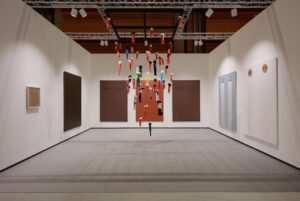
本展は、中辻悦子の実践を特徴づける二つの重要なシリーズ、インスタレーション《POCO PIN》と、1987 年から 1992 年に制作された 6 点の《Untitled》に焦点を当てる。
日常的な素材や残布から生まれ、空間に吊るされた《POCO PIN》は、限られた家庭環境という制約のなかから生まれた。壁や床に代わる制作の場として「天井」を発見した中辻は、制約そのものを新たな空間表現へと転換していく。揺れ動くこれらのオブジェは、人形でも具象彫刻でもなく、「ひとのかたち」を想起させながら、身体の不在と存在の気配を空間に立ち上げる。
一方、1980 年代後半から 90 年代初頭にかけて制作された《Untitled》では、「ひとのかたち」への探究が絵画へと展開される。大胆で明快な色彩と最小限の造形要素によって、人の姿は画面のなかで次第に還元され、背景と溶け合いながら、像と画面の境界を曖昧にしていく。
空間と画面、物体とイメージ、身体とその不在。《POCO PIN》と《Untitled》は、異なるメディウムでありながら、中辻が長年問い続けてきた「ひとのかたち」によって結ばれている。本展は、絵画とインスタレーションの境界を往還しながら独自の造形言語を築いた中辻悦子を、戦後日本美術における独立した実践として再考するものである。
Yoshiaki Inoue Gallery is pleased to participate in Frieze Seoul 2026 from September 2 to September 5, 2026. The presentation will feature works by Etsuko Nakatsuji.
Etsuko Nakatsuji:The Human Form Between Space and Surface
This presentation focuses on two pivotal series in Etsuko Nakatsuji’s practice: the suspended installation POCO PIN and six Untitled paintings created between 1987 and 1992.
Made from everyday materials and leftover fabric, POCO PIN emerged from the constraints of Nakatsuji’s domestic environment.
Discovering the ceiling as an alternative site for artistic production, she transformed spatial limitations into a new language of expression.
Suspended and gently moving in space, these objects are neither dolls nor figurative sculptures. Instead, they evoke the “human form,” creating a sense of bodily presence through its very absence.
In the Untitled paintings produced from the late 1980s to the early 1990s, Nakatsuji extended her exploration of the human form into painting. Through bold, luminous colors and minimal visual elements, the figure is progressively reduced, merging with the surrounding pictorial field and blurring the boundary between figure and ground.
Space and surface, object and image, body and absence: despite their different media, POCO PIN and Untitled are connected by Nakatsuji’s sustained inquiry into the human form. Moving between painting and installation, she developed a distinctive visual language that transcends conventional boundaries between the two. This presentation reconsiders Nakatsuji as an independent and singular voice within the history of postwar Japanese art.